
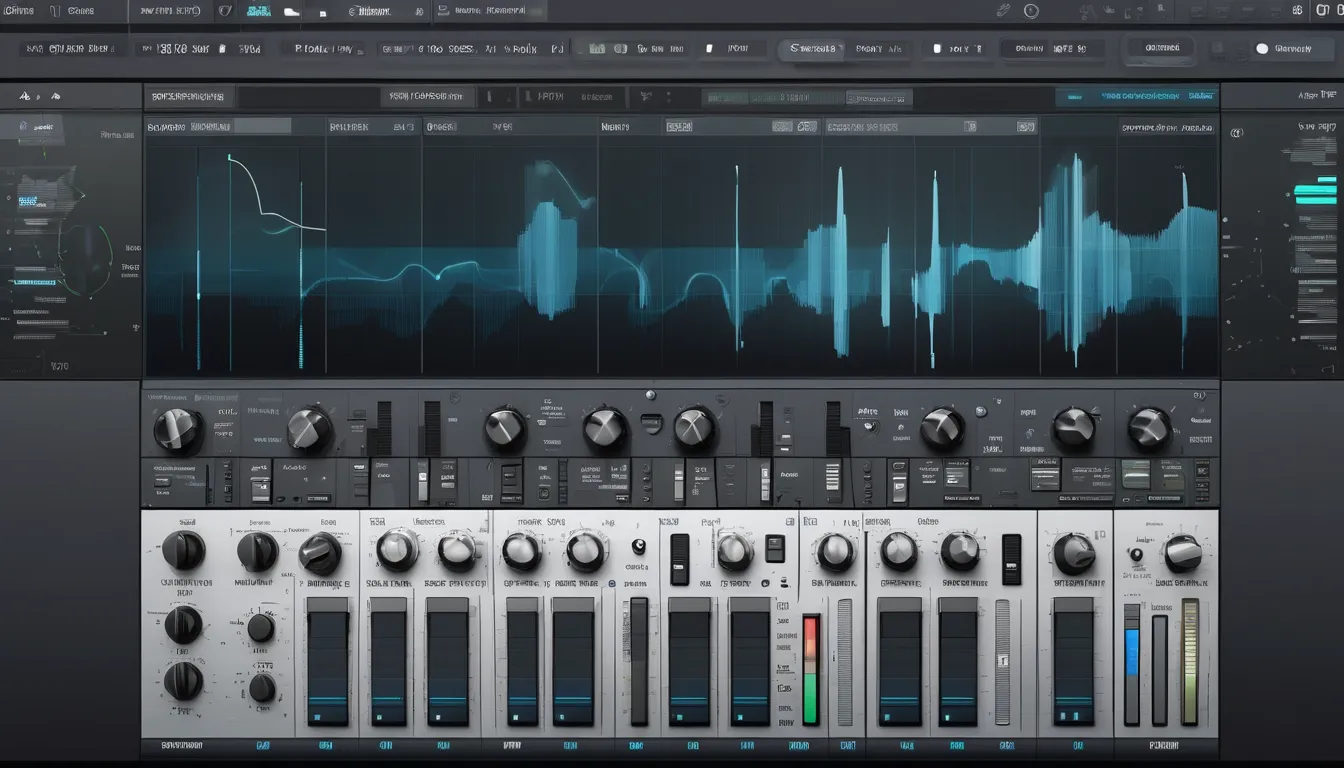
If you’re looking to take your audio editing skills to the next level, you’re likely familiar with the basics of multitrack editing. But what if you want to create a truly professional-sounding mix? You know, the kind that makes your audience stop and take notice. To achieve that, you need to go beyond the fundamentals. You need to explore advanced techniques like effects processing, automation, and dynamic mixing strategies. But where do you start? Let’s begin by breaking down the tools and techniques that can help you unlock your full creative potential – and we’ll start with the power of advanced multitrack editing.
Advanced Multitrack Editing Techniques
Within the realm of audio editing, advanced multitrack editing techniques can make all the difference in achieving a professional-sounding mix. You’re likely familiar with the basics of multitrack editing in Adobe Premiere, but taking it to the next level requires a deeper understanding of the software’s capabilities.
To start, you’ll want to focus on creating a balanced mix by adjusting the levels and panning of each track. This will help you create a clear and immersive audio experience for your listeners.
You’ll also want to experiment with different track arrangements to find the perfect balance of instruments and vocals.
Premiere also offers advanced multitrack editing features such as track grouping, which allows you to control multiple tracks at once, and track stacking, which enables you to create complex audio arrangements.
Effects Processing and Automation
Most multitrack editing projects in Adobe Premiere require some level of effects processing to give the audio a polished, professional sound.
As you work on your project, you’ll likely need to apply effects to individual tracks or the master track. You can access effects in the Effects panel, where you’ll find a range of options, including EQ, compression, reverb, and delay.
When applying effects, you can choose from presets or create your own custom settings.
You can also use the Effects Controls panel to adjust effect parameters in real-time, allowing you to fine-tune your audio as you play it back.
To automate effects, you can use keyframes to create dynamic changes over time.
For example, you can use keyframes to fade in reverb on a vocal track or to create a ducking effect on a music track.
Dynamic Audio Mixing Strategies
You’ve applied effects to your tracks and achieved a polished sound, but now it’s time to think about the bigger picture: how all those tracks work together.
Dynamic audio mixing strategies help you balance levels, create space, and guide the listener’s attention.
Start by setting a clear hierarchy of importance among your tracks, with the main elements like vocals or dialogue at the forefront.
Use compression and limiting to control dynamics and prevent sudden peaks from overpowering the mix.
To create depth and width, experiment with panning and depth effects like reverb and delay.
These tools can help you position sounds in the stereo field and create a sense of distance.
It’s also essential to manage your mix’s overall frequency balance, using EQ to carve out space for each element and prevent muddiness.
By strategically balancing levels, frequencies, and spatial placement, you can craft a cohesive and engaging mix that draws the listener in.
As you work, trust your ears and make adjustments based on how the mix sounds in different environments and on different playback systems.
Advanced Noise Reduction Methods
Effective noise reduction is a crucial step in polishing your audio, and advanced methods can make all the difference in achieving professional-sounding results.
As you work on your project, you’ll likely encounter various types of noise, such as hiss, hum, or background chatter.
To tackle these issues, you’ll need to employ advanced noise reduction techniques.
One approach is to use spectral repair tools, which allow you to visually identify and remove noise from specific frequency ranges.
This method is particularly effective for eliminating unwanted sounds like clicks, pops, or hiss.
You can also use multiband compression to isolate and reduce noise in specific frequency bands.
This technique is useful for tackling noise that’s present in multiple frequency ranges.
Another advanced noise reduction method is to use adaptive noise reduction algorithms, which analyze your audio in real-time and adjust their noise reduction settings accordingly.
These algorithms are especially useful for reducing noise in dynamic audio environments, such as podcasts or live recordings.
Mastering for Professional Results
With your audio polished and noise-free, it’s time to take it to the next level by mastering for professional results. Mastering is the final stage of the audio post-production process, and it’s essential to get it right.
You’re preparing your audio for distribution, whether it’s for streaming, CD, or film. Your goal is to make your audio sound great on any device, from earbuds to home theaters.
To start mastering, you’ll need to analyze your audio and identify areas for improvement. Look at the frequency spectrum, dynamics, and stereo image. You can use Premier’s built-in metering tools or third-party plugins to help you analyze your audio.
Next, you’ll use EQ, compression, and limiting to balance your audio and prepare it learn how to mix reverb distribution. EQ will help you balance the tone, while compression will even out the dynamics. Limiting will prevent your audio from exceeding maximum levels. You can use Premier’s built-in effects or third-party plugins to achieve professional results.
Conclusion
You’ve taken your audio editing skills to the next level by mastering advanced multitrack editing techniques, effects processing, and automation. By balancing levels and panning, grouping tracks, and employing dynamic mixing strategies, you’ve refined your sound. Advanced noise reduction methods have further polished your audio. Finally, mastering your audio for professional results has prepared it for distribution on various devices, ensuring your creations sound their best wherever they’re played.