
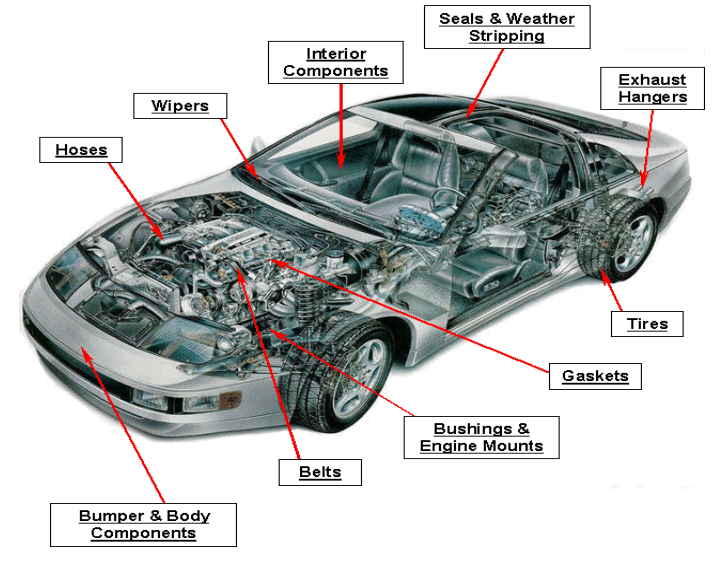
Cars are far more than just a mode of transportation. They are finely tuned machines made up of hundreds of parts, each performing a specific function to ensure that your car runs smoothly and safely. From the engine that powers your vehicle to the small bolts and fasteners that hold it together, every part plays a critical role in the performance and longevity of your car. In this article, we will explore the essential car parts, their functions, and why they matter to the overall operation of your vehicle.
1. Engine: The Heart of Your Car
The engine is the powerhouse of the car, responsible for converting fuel into the power that drives the vehicle. It works by igniting a mixture of fuel and air to create combustion, which then powers the pistons, turning the crankshaft and ultimately providing the movement needed for your car to drive.
- Cylinder Block: This forms the main structure of the engine and houses the cylinders in which combustion occurs.
- Pistons: The pistons move up and down within the cylinders to convert the explosive energy of the combustion into mechanical motion.
- Crankshaft: The crankshaft converts the linear motion of the pistons into rotational motion, which powers the drivetrain.
- Timing Belt/Chain: It synchronizes the rotation of the crankshaft and camshaft, ensuring the engine’s valves open and close at the right time.
2. Transmission: Delivering Power to the Wheels
The transmission is a vital part of your car’s powertrain, responsible for transferring the engine’s power to the wheels while adjusting the car’s speed and torque. The type of transmission can vary, and it significantly affects your driving experience.
- Manual Transmission: Requires the driver to manually shift gears, offering more control over the vehicle.
- Automatic Transmission: Shifts gears automatically depending on the car’s speed, offering a smoother driving experience.
- CVT (Continuously Variable Transmission): Unlike traditional transmissions, CVTs don’t have fixed gears but instead provide an infinite number of gear ratios for smoother acceleration.
3. Battery: The Electrical Backbone
The battery powers your car’s electrical systems and provides the initial electrical charge needed to start the engine. It also supports the functioning of various accessories, such as lights, radio, and air conditioning.
- Lead-Acid Battery: The most common type of battery, it uses lead plates and sulfuric acid to produce electrical energy.
- Lithium-Ion Battery: Found in electric vehicles (EVs), this type offers higher energy efficiency, a longer lifespan, and faster charging compared to lead-acid batteries.
4. Suspension System: Comfort and Control
The suspension system connects the car’s wheels to the body and is designed to absorb road irregularities. This ensures a smooth ride and helps maintain control, especially when driving over bumps or taking turns.
- Shock Absorbers: These components dampen the impact of road bumps, providing a more comfortable ride by reducing the effect of shocks.
- Springs: Springs support the weight of the vehicle, helping to absorb shock and maintain stability during driving.
- Struts: Struts combine the functions of shock absorbers and springs into one unit, offering greater stability and support to the vehicle’s suspension system.
5. Brakes: Ensuring Safety
The braking system is arguably one of the most crucial components for vehicle safety, as it allows you to slow down or stop your car. A failure in the brake system can have severe consequences, so it’s essential to ensure it’s well-maintained.
- Disc Brakes: These are the most common type of brakes today. Disc brakes use friction from brake pads pressing against a rotating disc to slow down the vehicle.
- Drum Brakes: Less commonly used, drum brakes rely on brake shoes pressing against a drum to stop the car.
- Anti-lock Braking System (ABS): ABS prevents the wheels from locking up during hard braking, helping the driver maintain steering control and avoid skidding.
6. Cooling System: Keeping the Engine at Optimal Temperature
The engine generates a lot of heat during operation, and if the temperature is not regulated, it can lead to overheating and damage. The cooling system ensures that your car’s engine operates at an optimal temperature, preventing costly damage.
- Radiator: The radiator dissipates the heat absorbed by the coolant, maintaining the engine’s temperature within safe limits.
- Thermostat: It controls the flow of coolant to the engine, ensuring that it operates at the proper temperature.
- Coolant: A mixture of water and antifreeze that circulates through the engine and radiator, transferring heat away from the engine.
7. Exhaust System: Emissions Control
The exhaust system removes harmful gases from the engine and ensures they are safely expelled from the vehicle. It also helps reduce noise and pollutants, making your car more environmentally friendly.
- Exhaust Manifold: This collects exhaust gases from the engine’s cylinders and channels them into the rest of the exhaust system.
- Catalytic Converter: The catalytic converter reduces harmful emissions by converting them into less harmful substances, such as carbon dioxide and water vapor.
- Muffler: The muffler reduces the noise created by exhaust gases leaving the engine, making the car quieter.
8. Fuel System: Powering the Engine
The fuel system ensures that your car’s engine receives the right amount of fuel at the right time. A well-functioning fuel system is essential for efficient performance and optimal fuel economy.
- Fuel Tank: This stores gasoline or diesel, ready to be pumped into the engine when needed.
- Fuel Pump: The fuel pump transports fuel from the tank to the engine, maintaining the necessary pressure for the system to work efficiently.
- Fuel Injectors: These deliver fuel directly into the engine’s combustion chamber in precise amounts, ensuring that the engine runs smoothly and efficiently.
9. Lighting System: Visibility and Safety
The lighting system plays an essential role in helping you see the road and making your vehicle visible to other drivers, especially at night or in poor weather conditions.
- Headlights: These illuminate the road ahead, ensuring that you can see clearly in the dark.
- Turn Signals: Turn signals communicate your intent to other drivers, helping prevent accidents when changing lanes or turning.
- Brake Lights: These light up when you apply the brakes, letting drivers behind you know you are slowing down or stopping.
10. Tires and Wheels: Contact with the Road
Tires are the only part of the vehicle that actually touches the road, so maintaining them is crucial for safety and performance. The wheels and tires are responsible for providing traction and absorbing the forces from the road.
- Tire Tread: The pattern of grooves in the tire’s surface provides grip, especially in wet conditions.
- Wheel Rims: These are the metal circles that hold the tires in place and connect the tires to the vehicle’s suspension system.
11. Steering System: Directional Control
The steering system allows the driver to control the direction of the car. It’s vital for maneuvering and ensuring that the vehicle follows the driver’s inputs.
- Steering Wheel: The driver uses the steering wheel to control the direction of the car.
- Rack and Pinion: This gear system converts the steering wheel’s rotational movement into the linear movement needed to turn the wheels.
- Power Steering: Power steering uses hydraulic or electric assist to make steering easier, especially at low speeds.
12. Air Conditioning and Heating: Comfort Control
The HVAC (Heating, Ventilation, and Air Conditioning) system ensures that the car’s interior remains comfortable in various weather conditions.
- Compressor: This part pressurizes refrigerant to cool the air, keeping the cabin comfortable in hot weather.
- Heater Core: The heater core uses heat from the engine to warm the air for the car’s interior in cold weather.
- Blower Fan: This fan circulates the air inside the cabin, distributing heat or cool air as needed.
13. Windshield Wipers: Maintaining Visibility
Windshield wipers are essential for clearing rain, snow, or dirt from the windshield, ensuring the driver’s visibility during inclement weather.
- Wiper Blades: These rubber components move across the windshield to clear away water, dirt, and debris.
- Windshield Washer Fluid: A cleaning fluid sprayed onto the windshield to help clean the glass and improve visibility.
Conclusion: The Synergy of 汽車零件
Every part of a car has a unique and essential function. While individual components may seem small or insignificant, they are all interconnected, working together to provide the safe, efficient, and enjoyable driving experience that car owners expect. Regular maintenance and care for these essential parts are critical for the longevity of your vehicle, ensuring it remains reliable for years to come. Understanding how your car works and keeping up with its maintenance will not only improve performance but also enhance your overall driving experience.